Beyond Convenience: How Smart Cleaners Gave My Parents Back Their Peace
Imagine your parents, once full of energy, now moving slower, tired just from picking up around the house. I saw that in my mom—until we introduced a quiet robot vacuum. It didn’t just clean floors; it lifted a weight off her shoulders. This isn’t about flashy tech. It’s about small, daily victories: less strain, more independence, and one less thing to worry about. That’s the real power of smart cleaning. It’s not about replacing the way we care for our loved ones. It’s about making that care more sustainable, less exhausting, and more focused on connection than chores. And honestly, it changed everything for my family.
The Moment I Realized My Parents Needed Help
I remember visiting my parents’ home one spring afternoon, the kind where sunlight spills across the hardwood floors and dust dances in the air. My mom was on her knees near the coffee table, trying to wipe up a crumb trail left by the grandkids. She paused, one hand braced against the sofa, breathing a little heavier than usual. I asked if she was okay. She smiled and said, 'Just getting a bit stiff, that’s all.' But something about the way she said it—the slight hesitation, the way she pushed herself up slowly—stuck with me.
Later that week, I noticed my dad standing in the kitchen, broom in hand, sweeping the same patch of tile over and over. He wasn’t cleaning; he was resting. He’d pause mid-sweep, catch his breath, then continue. It wasn’t laziness. It wasn’t neglect. It was fatigue—quiet, unspoken, but very real. And in that moment, I felt a wave of guilt. I’d been so focused on work, on my own kids, on checking in once a week with a phone call, that I hadn’t seen how much harder daily life had become for them.
I wanted to jump in and do everything—clean their house every weekend, rearrange their furniture, hire someone. But when I brought it up, my mom’s face changed. 'We don’t need help,' she said, her voice firm. 'We just need a little more time.' That’s when it hit me: doing everything for them wasn’t helping. It was taking away their sense of control. What they needed wasn’t a caretaker. They needed support—tools that let them keep living the way they always had, just with a little less strain. That’s when I started looking into smart cleaning devices, not as a replacement for care, but as a quiet partner in it.
Why Cleaning Becomes a Hidden Burden in Later Years
Cleaning seems simple. But for older adults, it’s often anything but. It’s not just about dirt or dust—it’s about physical effort, balance, energy, and pride. Bending to pick up a sock, reaching under a couch, standing on a step to wipe a shelf—each of these small actions carries risk. A misstep, a sudden dizziness, a pulled muscle—these aren’t just inconveniences. They can be turning points.
I spoke with a gerontologist at a local wellness center, and she explained how routine chores are deeply tied to a person’s sense of identity. 'For many older adults,' she said, 'keeping a tidy home isn’t just about cleanliness. It’s about dignity. It’s proof that they can still manage, still care for their space, still live independently.' When that ability starts to fade, it can quietly chip away at confidence. They might stop inviting friends over. They might avoid certain rooms. The house becomes a source of stress, not comfort.
And the physical toll is real. Studies show that even light housework—sweeping, mopping, vacuuming—can elevate heart rate and strain joints, especially for those with arthritis, respiratory issues, or limited mobility. One fall while cleaning can lead to long recovery times, fear of moving freely, and even a move to assisted living. That’s why reducing physical burden isn’t just about convenience. It’s about safety. It’s about preserving independence. And it’s about protecting the emotional peace that comes from living in a space that feels like your own.
First Try: When Tech Felt More Like a Toy Than a Tool
My first attempt at introducing smart cleaning didn’t go well. I bought what I thought was a great robot vacuum—modern, with mapping features and app control. I set it up with excitement, showed my parents how to start it from their phone, and left feeling proud. The next day, my mom called, voice a little shaky. 'It started making loud beeping noises, ran in circles, and got stuck under the piano. I had to pull it out myself. It felt… invasive.'
I realized then that I’d made a classic mistake: I’d chosen based on features, not on fit. That robot was designed for tech-savvy users who love apps and updates. But for my parents, it was confusing, unpredictable, and frankly, a little scary. The loud noises startled my dad, who has mild hearing sensitivity. The erratic movement made my mom feel like the house was no longer under her control. It wasn’t helping—it was adding stress.
That experience taught me something important: elderly-friendly technology isn’t about how advanced it is. It’s about how quietly and reliably it works. It needs to be simple, predictable, and respectful of routine. It shouldn’t demand attention. It should blend in, not stand out. I learned that the best tools for older adults aren’t the ones with the most bells and whistles. They’re the ones that just… work. Without fuss. Without noise. Without making the user feel like they’re failing if they don’t understand the manual.
The Right Fit: Finding a Cleaner That Respects Their Routine
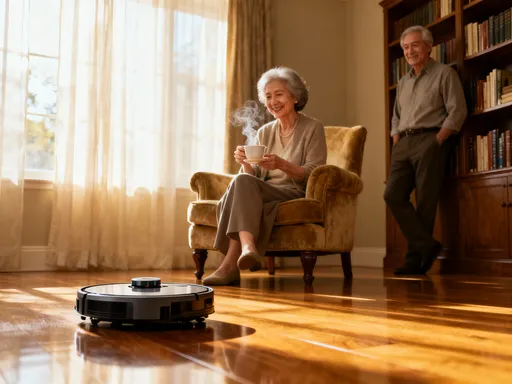
So I started over. This time, I focused on simplicity, quiet operation, and ease of use. I looked for a model with voice control, long battery life, and a self-emptying base—so my parents wouldn’t have to touch dust or debris. I found one that was nearly silent, with gentle chimes instead of beeps, and a straightforward schedule they could set once and forget.
Setting it up was different this time. Instead of doing it all myself, I invited my parents to be part of the process. We sat together, pressed the buttons, chose the cleaning times. I didn’t say, 'This is for you.' I said, 'This is for us. It’s one less thing we all have to worry about.' We picked a time that fit their rhythm—10:30 a.m., right after morning tea, when they’re usually reading in the living room. The robot glides out, cleans quietly, and returns on its own.
My dad now says, 'It runs when I have tea,' like it’s part of the ritual. That small sense of predictability matters. He knows when it’s coming. He’s not startled. He doesn’t have to think about it. And because it empties itself, there’s no mess, no maintenance, no need for them to do anything at all. It’s not a gadget. It’s a quiet helper that respects their pace, their space, and their peace.
More Than Clean Floors: The Ripple Effect on Daily Life
The change wasn’t just in the cleanliness of the house. It was in the way my parents moved through their days. My mom, who had stopped hosting her book club because 'the house never felt clean enough,' invited them back. She didn’t stress about vacuuming the night before. She didn’t apologize for a speck on the floor. 'The little machine takes care of it,' she told her friends, smiling.
My dad spends less time resting after chores and more time in his garden, where he grows tomatoes and herbs. He’s more active, more present. He even started walking to the park twice a week. Their sleep has improved—less stiffness, less nighttime discomfort from overexertion. And their mood? Lighter. Happier. There’s less frustration, fewer 'I can’t believe I can’t do this anymore' moments.
Even our family visits feel different. Before, I’d arrive and immediately start cleaning—sweeping, wiping, organizing. Now, I walk in, hug them, and sit down to talk. The house is already cared for. Our time together is about connection, not chores. And when my sister comes, she doesn’t feel the need to 'fix things.' We’re all more relaxed. Even their caregiver noticed. 'They seem more confident,' she said. 'They’re not apologizing for their home. They’re proud of it again.'
How We Made It Feel Like Their Choice, Not a Fix
One of the biggest challenges wasn’t the technology. It was the perception. My parents are proud people. They didn’t want to feel like they were 'giving in' to aging. So we had to be careful how we introduced it. We didn’t say, 'You’re too old to clean.' We said, 'Wouldn’t it be nice if the house took care of itself a little? That way, you can spend more time on what you love.'
We let them name the robot. They called it 'Dusty.' It sounds silly, but it helped. It wasn’t a machine invading their space. It was a little helper with a personality. They set the schedule. They decided which rooms to clean. They even chose when to pause it. Control stayed in their hands.
I’ve learned that the most successful tech introductions aren’t about solving a problem. They’re about enhancing a life. When older adults feel like they’re choosing a tool—not being given one because they’re failing—they embrace it. Dignity isn’t just about physical safety. It’s about agency. It’s about saying, 'I’m still in charge of my home, my routine, my life.' And that’s exactly what we protected.
Small Tips That Made All the Difference
There were little things we did that made the transition smoother. We placed virtual walls to keep Dusty out of the room with the favorite Persian rug. We used voice reminders—'Hey, let’s start cleaning after lunch'—so it felt natural, not forced. We chose a model with a long battery so it could finish the whole house without stopping.
We also used simple language. Instead of saying, 'The robot needs to recharge,' we said, 'Dusty’s taking a nap.' Instead of, 'You forgot to schedule it,' we said, 'Let’s let the little machine handle it today.' These small phrases reduced resistance and made it feel like a shared effort, not a correction.
We kept the charging base in a quiet corner of the hallway, not in the living room, so it didn’t dominate the space. We made sure it ran during low-activity times, so it didn’t interrupt conversations or naps. And we checked in—not to monitor, but to ask, 'How’s Dusty doing? Any changes you’d like to make?' Their feedback shaped how we used it, which made them feel heard and respected.
Technology That Doesn’t Replace, But Supports
Looking back, this journey wasn’t about automation. It wasn’t about replacing care with machines. It was about using thoughtful, quiet technology to support the care we already give. It was about removing a daily burden so my parents could focus on what matters—reading, gardening, hosting friends, feeling at peace in their home.
The best technology doesn’t shout. It doesn’t demand attention. It doesn’t make you feel behind if you don’t understand it. It slips in gently, like a helping hand that knows when to step back. It doesn’t take over. It supports. It protects independence. It preserves joy.
And sometimes, the most powerful tech isn’t the one that does the most. It’s the one that lets someone stay exactly who they’ve always been—someone who loves their home, their routine, their life—just with a little less strain, a little more ease, and a lot more peace. That’s the kind of innovation that truly matters. Not because it’s smart. But because it’s kind.