Tired of Losing Track of Family Goals? This App Keeps Us All on the Same Page
Ever feel like your family’s goals—getting fit, saving money, or just spending more quality time—start strong but fade away by month’s end? You’re not alone. Without a simple way to track progress together, even the best intentions fall apart. But what if there was an easy, low-pressure way to stay aligned? I discovered a family safety app that quietly transformed how we set and stick to our goals—no nagging, no stress, just gentle nudges and shared wins. It didn’t take over our lives; it simply helped us show up for each other, one small step at a time.
The Frustration of Faded Family Goals
How many times have we started the month with a burst of motivation, only to find ourselves back in old routines by week three? I remember sitting at the kitchen table with my husband and two kids, full of energy, listing our family goals for the new month: eat more vegetables, cut down on snacks, save for a summer trip, and have one screen-free night a week. We were all in—until we weren’t. By the second weekend, no one could remember who was doing what. My daughter skipped her extra walk, my son forgot to log his reading, and I gave up on tracking our grocery spending after one confusing spreadsheet meltdown. The goals didn’t fail because we didn’t care—they failed because we had no system to support them.
Life moves fast, especially when you’re managing a household. Between school drop-offs, work deadlines, laundry piles, and dinner decisions, it’s no wonder family goals get lost in the shuffle. We rely on memory, sticky notes, or good intentions, but those fade quickly. What we really need isn’t more willpower—it’s a better way to stay connected and consistent. That’s when I started wondering: what if technology could help us not just stay safe, but also stay on track with the things that matter most?
I wasn’t looking for anything fancy—just something simple, something that wouldn’t add more to my to-do list. Then a friend mentioned she uses a family safety app not just to check in on her kids’ locations, but to track everything from bedtime routines to savings goals. At first, I was skeptical. Wasn’t that overkill? But after another failed attempt at a family fitness challenge—this time, it lasted only nine days—I decided to give it a try. What I discovered changed how we think about goals, progress, and even how we support each other.
How Family Safety Apps Do More Than Just Track Locations
When I hear “family safety app,” I used to picture only one thing: knowing where my kids are after school. And yes, that’s still a big part of it—getting a quick ping when they arrive at a friend’s house or a gentle alert if someone’s running late from practice. But what surprised me is how much more these apps can do. The one we started using has become our family’s quiet cheerleader, our shared notebook, and our weekly check-in hub—all in one. It’s not about control or surveillance; it’s about connection. It helps us feel close, even when we’re busy and scattered.
Modern family safety apps have evolved far beyond GPS tracking. They now include tools like shared check-ins, routine reminders, goal dashboards, and even mood logs. Think of it as a digital family bulletin board—where instead of paper notes on the fridge, everyone can see updates in real time. When my daughter logs that she finished her homework early, I get a small notification. When my husband marks that he took his daily walk, the app shows a little progress bar moving forward. These small signals add up to something bigger: a sense of “we’re in this together.”
One of the first things we set up was a shared goal for screen-free evenings. Every Monday, the app sends a family reminder: “Tonight is tech-free night!” It’s not pushy—it’s just there, like a friendly nudge. We light candles, play board games, or bake cookies together. And when we complete it, the app celebrates it with a simple “Great job, team!” That tiny moment of recognition makes the effort feel worthwhile. It’s not about perfection; it’s about showing up. The app doesn’t judge, doesn’t scold—it just helps us remember what we said we wanted.
Turning Big Dreams into Daily Actions with Goal Tracking
We all have big dreams for our families—healthier habits, financial freedom, more joyful moments. But big dreams can feel overwhelming when they’re not broken down. Saying “we want to be healthier” is inspiring, but it’s not actionable. How do you measure that? How do you know if you’re making progress? That’s where the app’s goal-tracking feature became a game-changer for us. It helped us turn vague hopes into clear, doable steps.
Take our goal to eat better. Instead of just saying “eat more vegetables,” we used the app to set a simple daily habit: “Include one serving of veggies with lunch and dinner.” The app reminds us each day, and when someone logs it, the whole family sees it. My son, who used to groan at broccoli, now proudly taps “Done!” after dinner. It’s not magic—it’s consistency. The app turns intention into routine, one small win at a time.
Another goal was saving for a family trip. Before, we’d talk about it, maybe set aside a little cash, but never really track it. Now, we have a shared savings goal in the app. Every week, it shows how much we’ve saved and how much is left. If we overspend on groceries or impulse buys, the app sends a gentle alert: “You’re a bit over budget this week.” No guilt, no blame—just awareness. It’s like having a calm, kind financial partner who helps us stay focused without making us feel bad.
The beauty of this system is that it works with our lives, not against them. I don’t have to remember to check in with everyone. The app does the heavy lifting, so I can focus on being present. And when progress is visible—like watching our vacation fund grow—it becomes motivating, not stressful. We’re not just dreaming anymore; we’re doing.
Making It Stick: How Gentle Reminders Beat Nagging
Let’s be honest—nagging is exhausting. For everyone. I used to be the one calling out from the kitchen: “Did you brush your teeth?” “Did you pack your gym clothes?” “Did you turn off the lights?” And I could see the eye rolls before I even finished the sentence. My kids would tune me out, my husband would pretend not to hear, and I’d end up feeling like the family’s full-time manager—tired and unappreciated. What I didn’t realize was that the problem wasn’t my family; it was my approach.
Enter the app’s reminder system. We set up automated, kind-toned prompts for daily habits: “Time to take your vitamins,” “Don’t forget your water bottle,” “Homework check-in at 6 PM.” These aren’t harsh alarms—they’re soft notifications, like a quiet whisper from a helpful friend. And something amazing happened: my kids started responding. Not because I told them to, but because the phone did. It removed the emotional charge from the request. No tone of voice, no frustration—just a simple, neutral alert.
We even customized the timing. Mornings are chaotic, so we set reminders for after school. Evenings are for winding down, so we agreed: no goal alerts between 8 and 9 PM. That small boundary made a big difference. It showed respect for downtime and helped us avoid burnout. Now, when my daughter remembers to floss because her phone reminded her, she feels proud—not pressured. And I get to be the mom who says “Great job!” instead of “I told you three times!”
The app didn’t eliminate the need for communication, but it changed the quality of it. Instead of repeating myself, I can have real conversations: “How was your walk today?” “Did the reminder help you remember your water?” It shifted our dynamic from control to care. And honestly? I sleep better knowing I’m not the only one keeping track.
Celebrating Small Wins as a Family
We tend to focus on big milestones—passing a test, finishing a project, reaching a savings goal. But real change happens in the small, everyday moments. The first time my son chose water over soda. The night we all put our phones away and played cards for an hour. The morning my daughter got up early and made her bed without being asked. These aren’t grand achievements, but they matter. And the app helped us notice them.
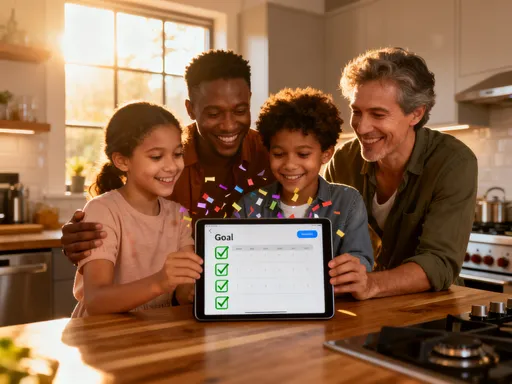
One of its most powerful features is the ability to celebrate milestones. When someone hits a goal—like seven days of logging their reading or five workouts in a month—the app sends a shared notification. Sometimes, it even shows little animated confetti. At first, I thought it was silly. But then I saw my son’s face light up when he got one. “I did it!” he said, showing me his phone. That moment of pride was worth more than any reward chart on the wall.
We started making it a habit to acknowledge these wins at dinner. “Who had a good goal day today?” Someone always raises their hand. We cheer, we high-five, we say “good job.” And slowly, the tone in our home shifted. We’re not perfect—there are still missed days and forgotten tasks—but we’re quicker to encourage than to criticize. The app doesn’t track failures; it highlights progress. And that focus on what’s going right has made us kinder to each other.
For our kids, this matters even more. They’re learning that effort counts, that consistency builds confidence, and that small steps lead to real change. They’re not doing it for a prize—they’re doing it because it feels good to succeed. And as a mom, I’m learning to let go of perfection and celebrate the journey. Because progress, not perfection, is what builds a happy, resilient family.
Customizing Goals for Each Family Member
One size does not fit all—especially in families. My teenager cares about sleep and social time. My husband wants to stay active and reduce stress. I’m trying to carve out moments for mindfulness and creativity. And my younger son just wants to read more comic books and play outside. If we all had the same goals, it would feel forced, even unfair. But the app lets each of us set personal targets while still being part of the bigger picture.
We spent one Sunday afternoon setting up individual goals. My daughter chose to track her bedtime—she wanted to fall asleep faster. My son picked daily reading for fun. I added “10 minutes of quiet time” to my list. And my husband set a goal to walk 30 minutes three times a week. We didn’t pressure each other. We just shared what mattered to us. Then, we linked them all under our family dashboard. Now, when someone hits their personal goal, the whole family gets a heads-up. It’s not about competition—it’s about support.
Every Friday, we do a quick family check-in over snacks. No pressure, no grades—just a casual chat. “How did your week go?” “What helped you stay on track?” “What do you want to try next week?” These conversations have become some of our most meaningful moments. We’re learning what motivates each other. We’re adjusting goals when life gets busy. And we’re building a culture of flexibility and understanding.
For example, when my daughter had a big school project, she paused her bedtime goal for a week. Instead of seeing it as failure, we talked about balance. “It’s okay to slow down when you need to,” I told her. The app lets us pause or adjust goals without guilt. That freedom to adapt is what makes it sustainable. It’s not a rigid system—it’s a living, breathing part of our family life.
Building a Culture of Support, Not Pressure
The biggest lesson I’ve learned is this: the app works best when we use it with kindness. We made a family rule early on—no shaming, no scoreboard, no “You missed your goal again” comments. If someone falls short, we ask, “What got in the way?” not “Why didn’t you do it?” That small shift in language changed everything. It turned goal-tracking from a source of stress into a tool for empathy.
There was a week when I missed every single one of my mindfulness goals. I was overwhelmed with work and family stuff. Instead of beating myself up, I opened up at our Friday check-in. “I didn’t do well this week,” I admitted. My daughter said, “Maybe try shorter sessions?” My son suggested, “What if you do it while brushing your teeth?” Their support meant more than any app notification. We’re not just tracking habits—we’re learning how to care for each other.
The app didn’t fix our family. We still have messy days, forgotten tasks, and moments of frustration. But it gave us a better way to stay connected, to encourage each other, and to grow together. It’s not about being perfect. It’s about showing up, trying again, and celebrating the effort. And in a world that often feels too fast and too demanding, that’s a gift.
Technology doesn’t have to be cold or complicated. When used with heart, it can help us build stronger relationships, create healthier habits, and live with more intention. This app didn’t change our lives overnight—but it gave us a simple, gentle way to move forward, together. And for that, I’m truly grateful.